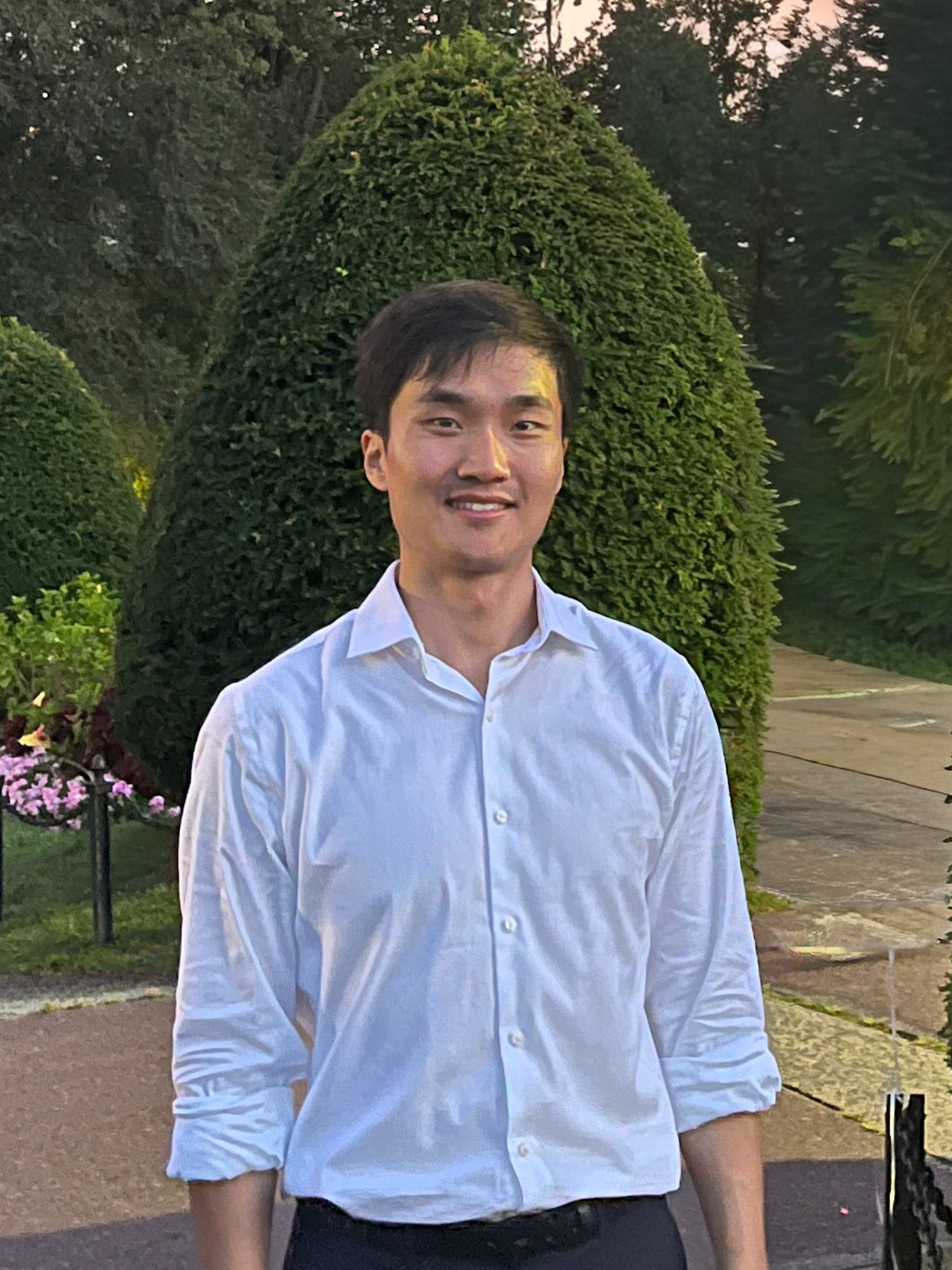
Hyunjae Lee
I am a PhD candidate in Economics at UNC-Chapel Hill. My research interests are in macroeconomics and innovation.
Working Papers
Steady aggregate growth coexists with non-stationary industry life cycles. A Schumpeterian growth model generates this coexistence as potential entrants choose between joining an existing industry and creating a new one. Individual industries follow endogenous life cycles, yet their stationary cross-section sustains steady growth and decomposes it into variety creation, frontier innovation, and follower catch-up. Calibrated to U.S. data, the model implies that growth is U-shaped in the firm-entry rate, with the economy on the downward-sloping segment. At the calibrated equilibrium, a constrained planner locally favors more industry creation over most of the stationary distribution, because entrants cannot appropriate the knowledge a new industry adds. Innovation policy operates not only through R&D incentives but also through the reallocation of entry between existing and new industries.
Work in Progress
Teaching
UNC Chapel Hill
- Advanced Macro Theory I — TA for Lutz Hendricks (Fall 2023), Can Tian (Fall 2025, 2026)
- Advanced Macro Theory II — TA for Stan Rabinovich (Spring 2024)
- Intermediate Macro (Undergraduate) — TA for Ying Chao (Spring 2026)
- Financial Economics (Undergraduate) — TA for Chris Roark (Fall 2024)
Seoul National University
- Advanced Macroeconomics — TA for Yena Park (Fall 2020)
- Macro Theory (Undergraduate) — TA for Yongsung Chang (Fall 2021)